Tree Removal
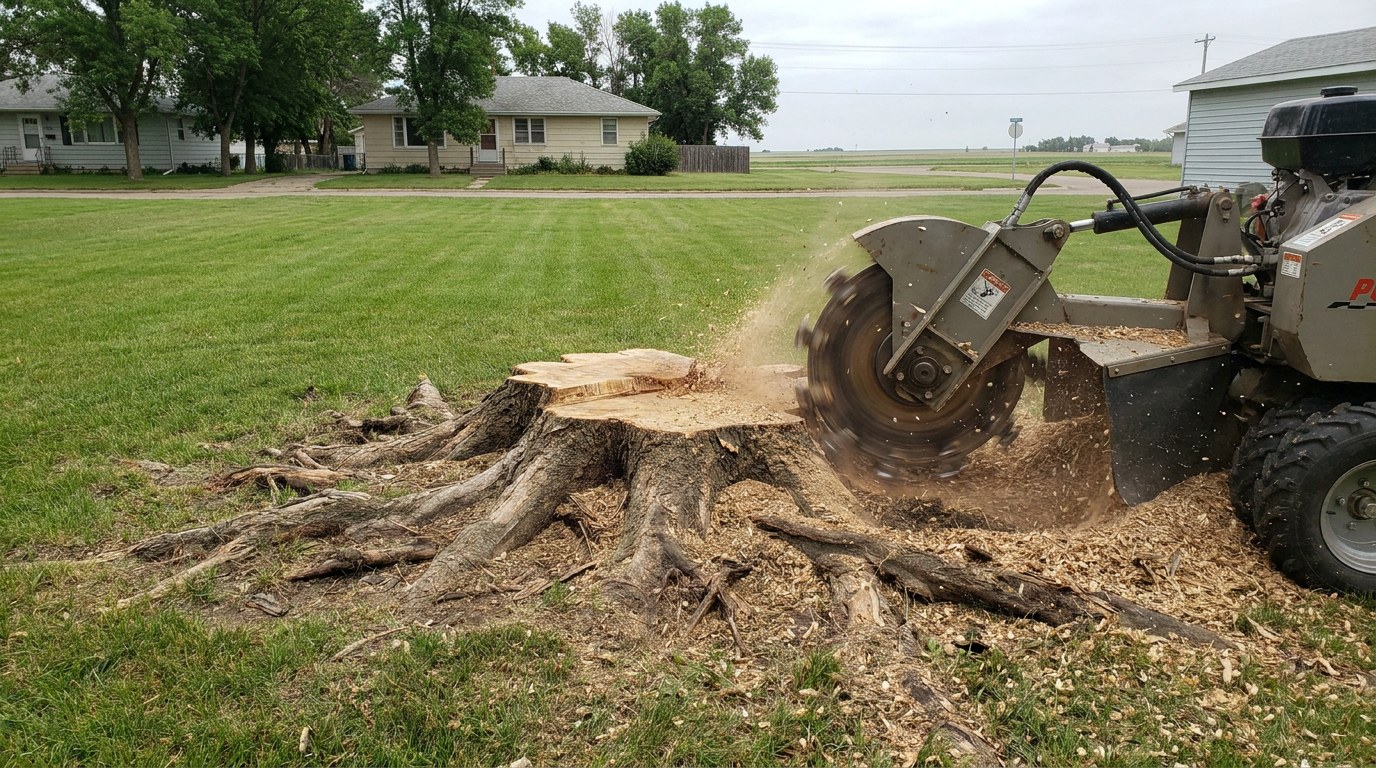
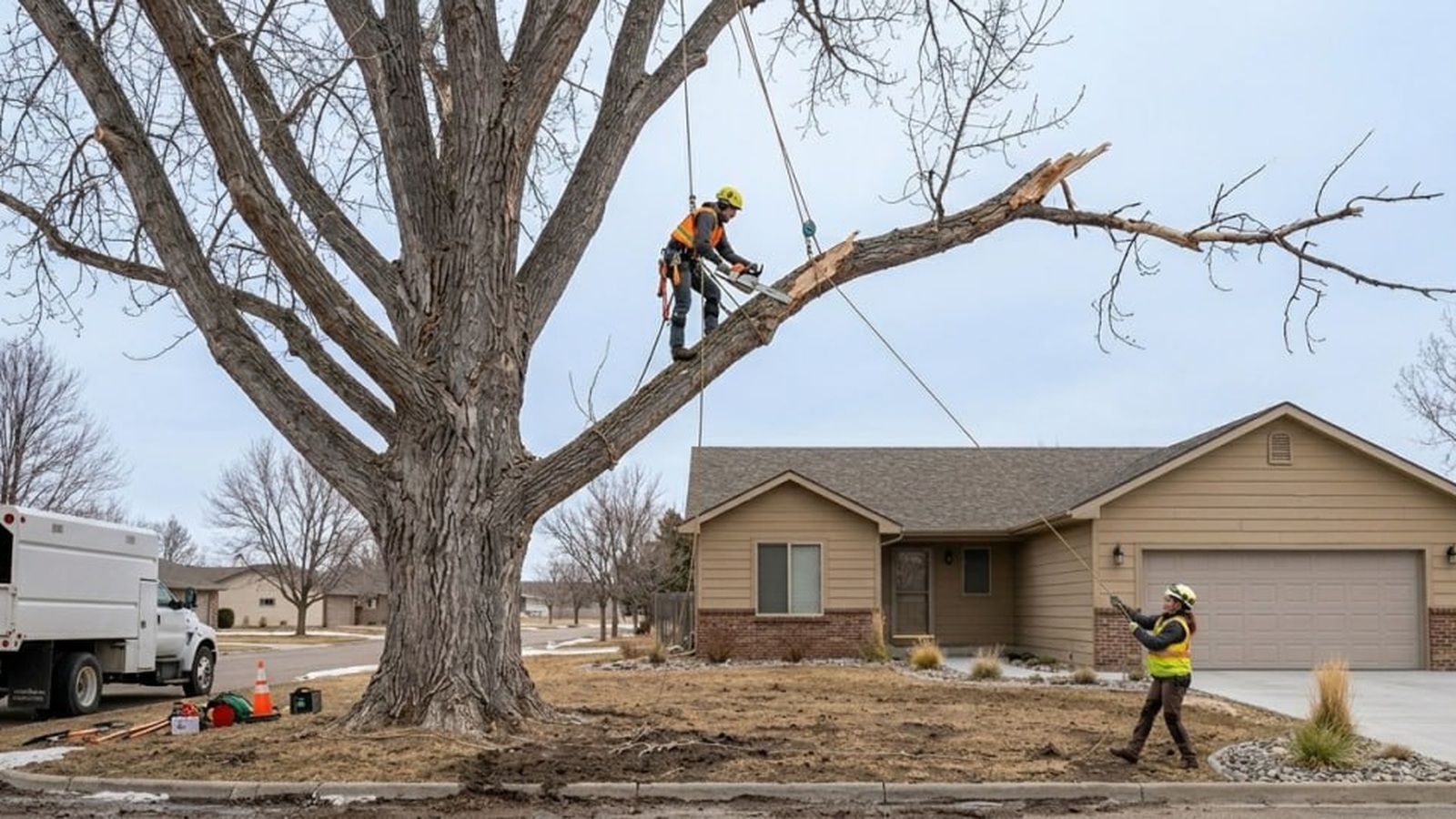
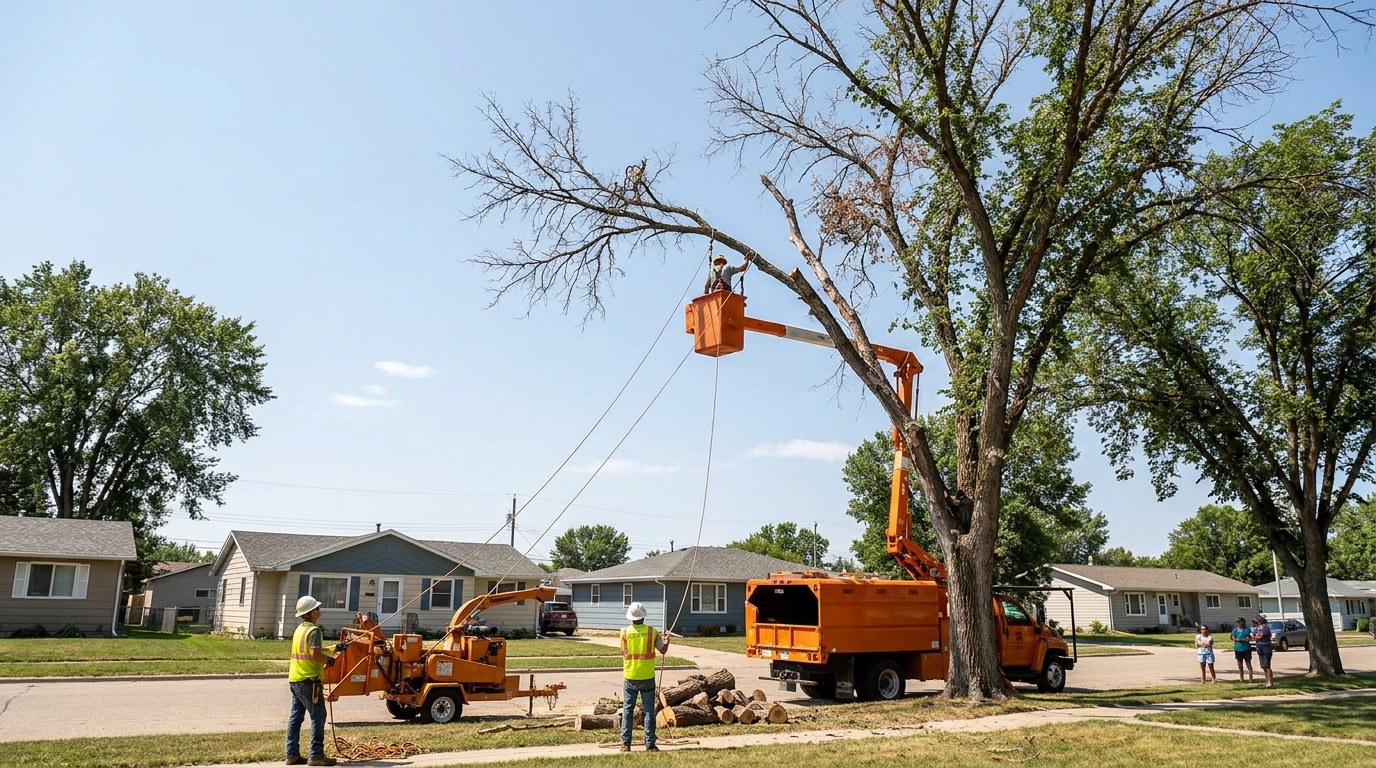
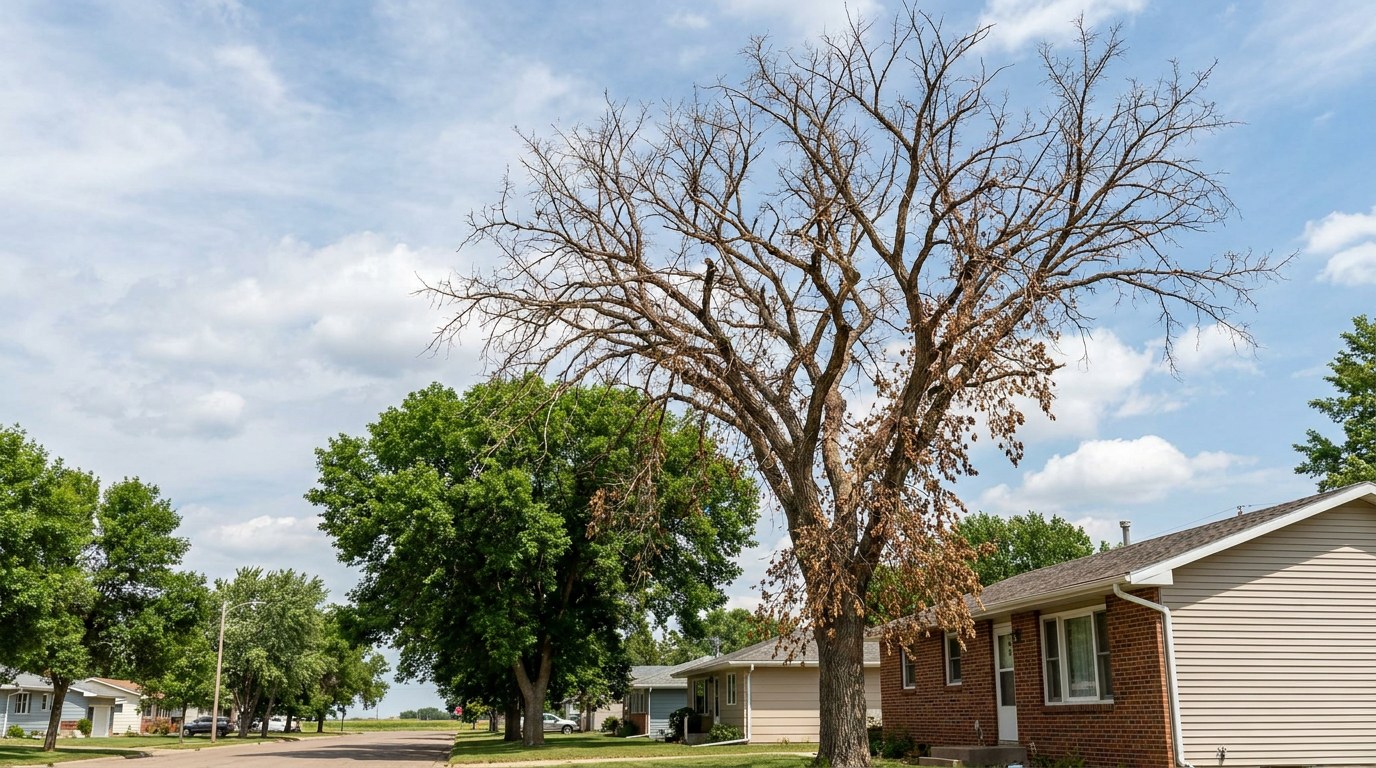
When a tree needs to come down. The triggers are consistent: a tree is dead or declining structurally, it has experienced significant ice or wind storm damage that compromised the main structure, it is too close to a structure to be managed safely by trimming, or the root system is causing active damage to driveways, sidewalks, or foundations. Paul R. in Minot had a big cottonwood dropping branches over the garage after a wet spring. Called in the morning, had someone out by afternoon. Straight answer on what needed to come down versus what could be trimmed — the job was done clean. Linda K. in Minot had a tree leaning since the last ice storm. It needed to come down before the next heavy snow, and it was handled the following week. Removal on cottonwood and elm near structures requires planning — rigging the limb sections so they come down in a controlled path rather than falling freely. Tight Ward County residential lots do not leave room for error. Dutch elm disease is the most common reason for urgent tree removal calls in Minot. If you're seeing yellowing or wilting in the upper canopy during summer, or bark that looks like it has small D-shaped exit holes, call for an assessment. DED spreads through root connections between neighboring elms and through elm bark beetles — a diseased tree left standing can infect healthy elms on adjacent properties. Early removal is significantly less expensive than waiting.
Best for: dead or structurally compromised trees, Dutch elm disease removals, post-ice-storm damage assessment and removal, trees too close to structures to manage safely, root damage to hardscape
See our tree removal page →See our Dutch elm disease page →